Technical Advisory & Assurance
Technical study · Engineering & Design
CFD modelling of a 2 MW Brisbane data hall at AI rack densities, comparing air, direct-to-chip liquid and immersion cooling on temperatures, PUE, energy cost and water use.
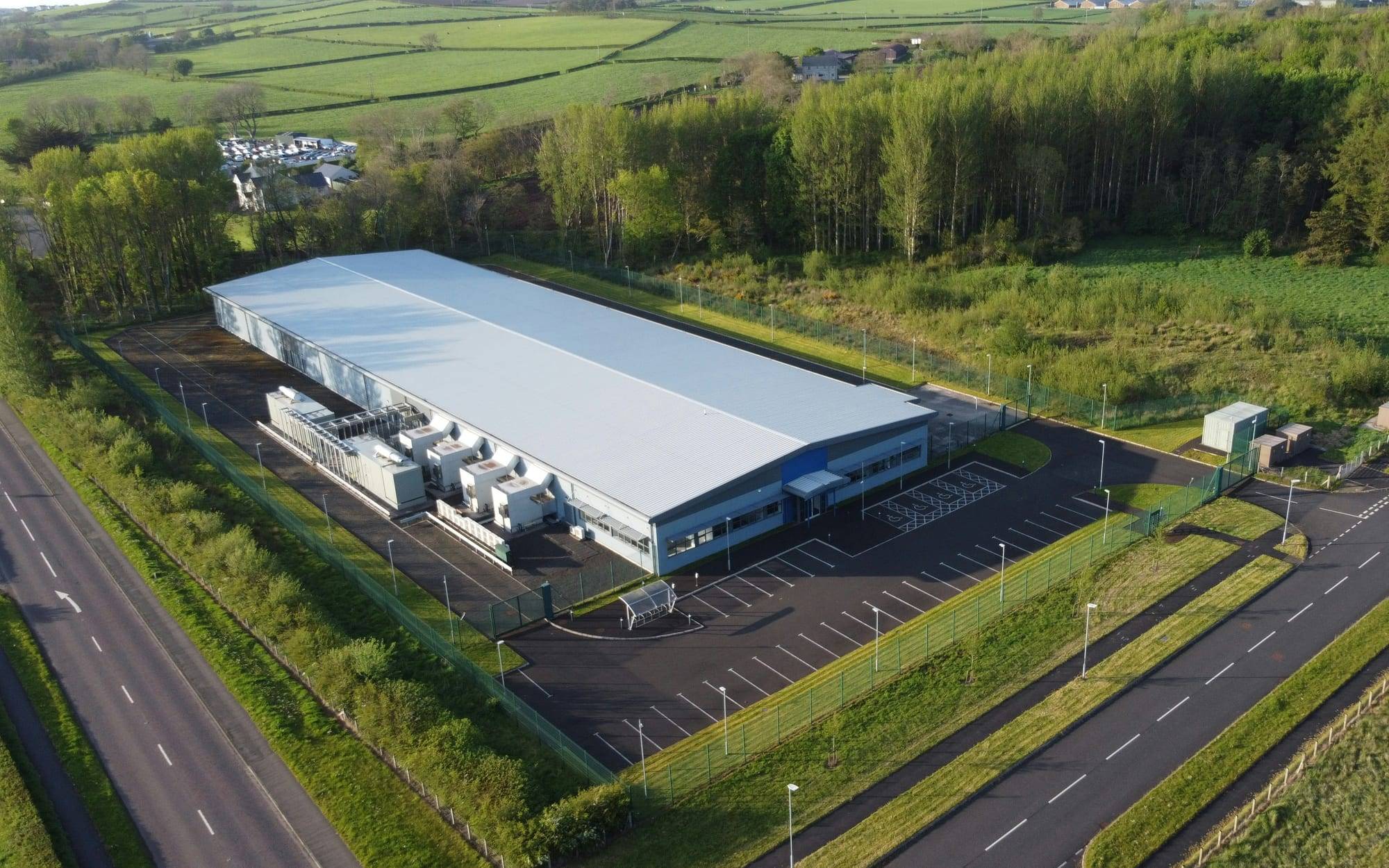
A colocation operator was fitting out a new 2 MW data hall in Brisbane for AI workloads, with tenants asking for racks of 100 kW and more. The base design was air-cooled with hot aisle containment.
The question they needed answered: Can air cooling handle AI rack densities in Brisbane's climate, and if not, which liquid cooling approach makes the most sense?
Air cooling works up to about 30 to 40 kW per rack. At 130 kW, hot spots of 31 to 34°C appear at the dense racks and their neighbours. More air handling doesn't fix it, because the limit is moving enough air through the rack.
Direct-to-chip liquid cooling handles the density, saves about $450,000 a year in energy against air, and is supported by the major AI server makers.
Warm-water loops at 35 to 45°C let dry coolers reject heat for most of the year in Brisbane, so water use is close to zero.
Immersion is more efficient again, but narrows the range of tenants. It suits a single-tenant or owner-operated hall better than colocation.
Retrofitting liquid cooling into a live colocation hall later means piping work around operating tenants. Making the hall liquid-ready now is the cheaper path.
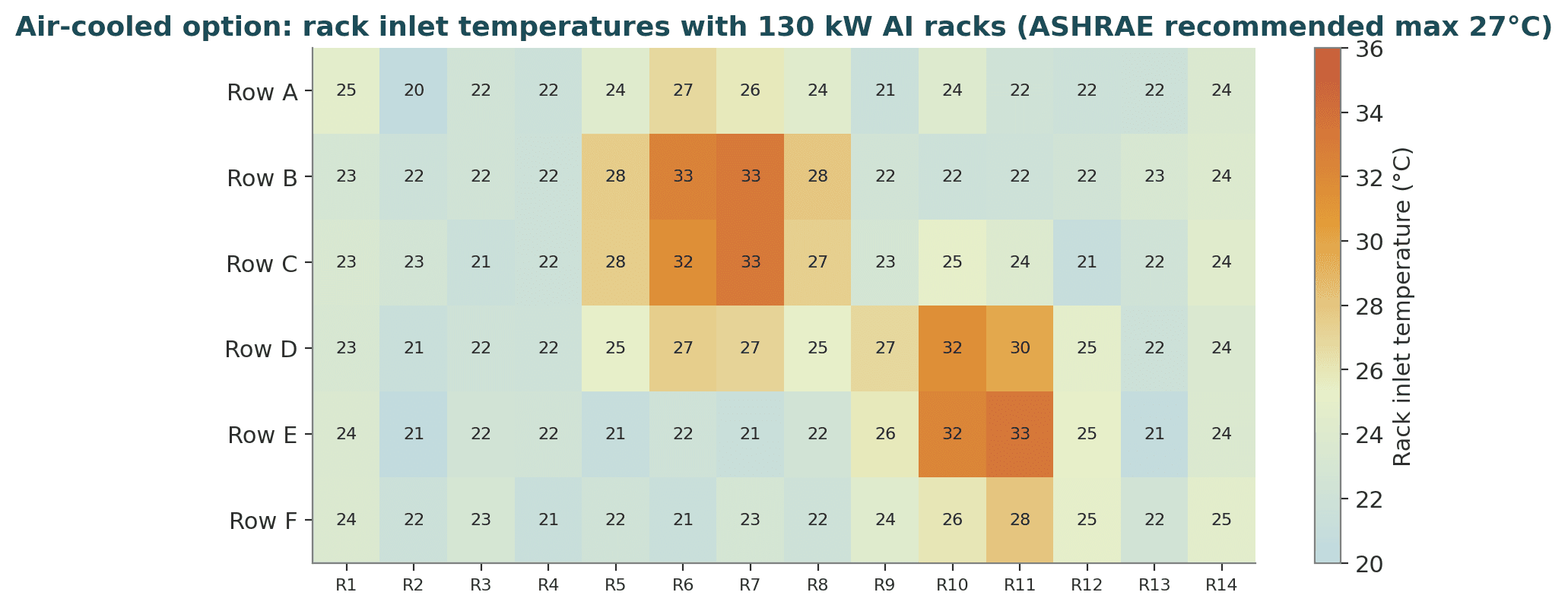
2 MW IT load at 90% average utilisation, energy at $130/MWh. PUE estimates based on Brisbane climate data and typical plant performance. Reference: ASHRAE TC 9.9 thermal guidelines.
Tell us what you're working on, and one of the people below will get back to you.
Talk directly to


Want to join us? We're always keen to hear from engineers who value strong fundamentals and real delivery experience.
Careers at Amarna