Technical Advisory & Assurance
Technical study · Engineering & Design
Site CFD and derating curves for megawatt truck chargers rated to 40°C on a yard that regularly runs hotter, and the layout changes that hold full output on summer afternoons.
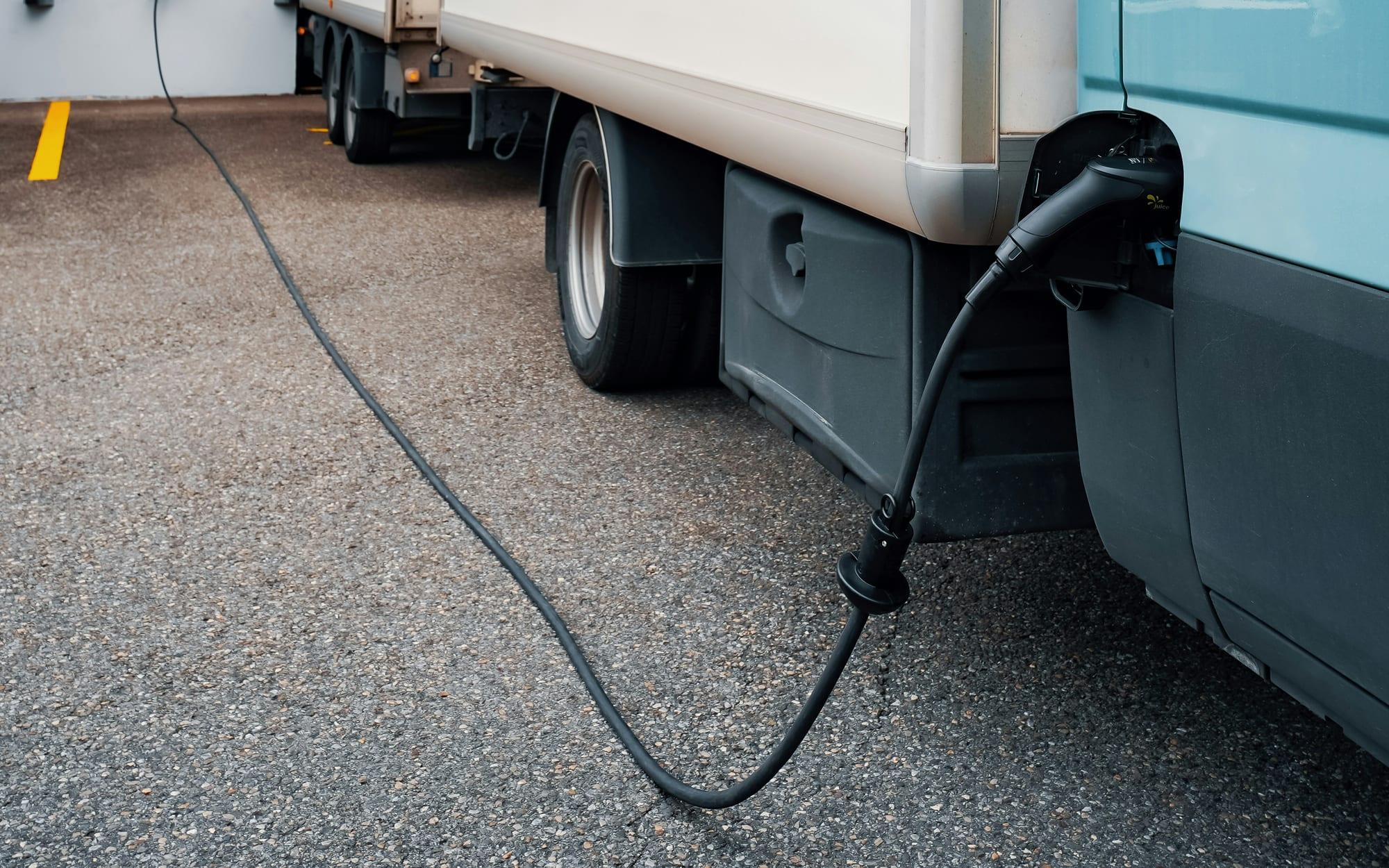
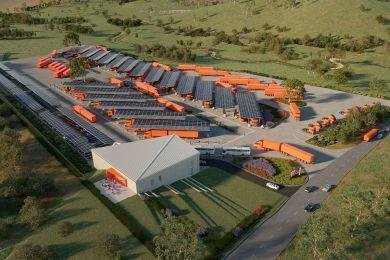
A charging operator was installing megawatt charging for heavy trucks at a logistics yard in South East Queensland. The vendor datasheet showed full output to 40°C, but the yard is a large expanse of hardstand that regularly goes past 40°C in summer, and the operator's customers expected consistent charge times.
The question they needed answered: How much will the chargers derate in a real Queensland summer, and what can be done about it before installation?
The main problem is recirculation. Cabinets placed back to back against a wall draw in each other's exhaust, so intake air runs 6 to 8°C above ambient and derating starts at about 38°C.
At 45°C the standard design gives about 710 kW instead of 1.2 MW. A 20 to 80% charge on a 600 kWh truck goes from about 22 minutes to over 30.
Hot afternoons are also the busiest time. With each charge taking about 45% longer, the hub can serve roughly a third fewer trucks in the afternoon peak.
A shade canopy, cabinets turned so intakes and exhausts are separated, and the vendor's higher-capacity cooling option hold full output to about 46°C.
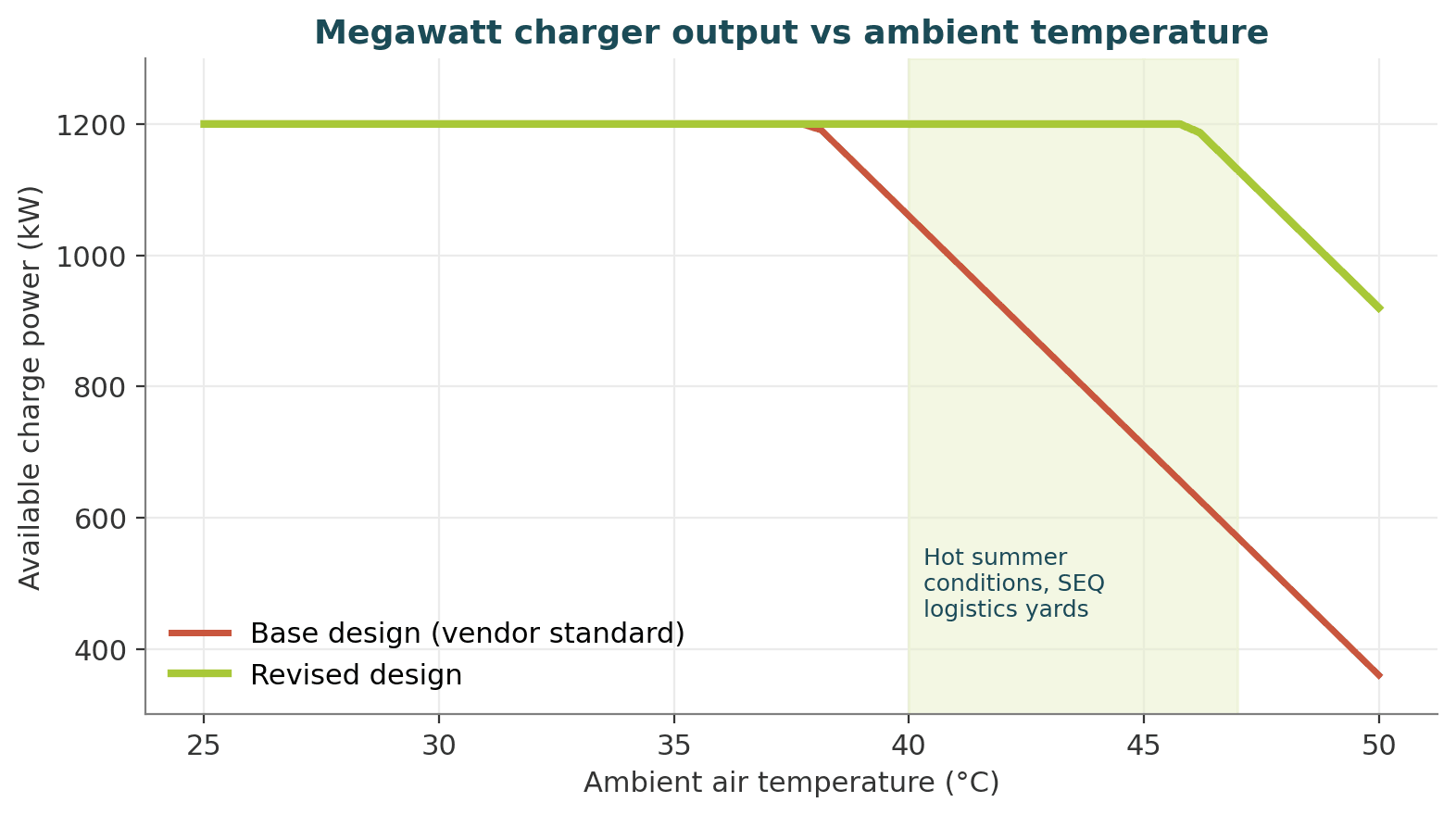
Converter efficiency 97% at full load. Derating slope based on typical vendor curves. 600 kWh battery charged from 20 to 80%, average power around 85% of peak.
Technical Advisory & Assurance
Technical Advisory & Assurance
Engineering & Design
Technical Advisory & Assurance
Project Delivery & Owner's Engineering
Tell us what you're working on, and one of the people below will get back to you.
Talk directly to


Want to join us? We're always keen to hear from engineers who value strong fundamentals and real delivery experience.
Careers at Amarna