Technical Advisory & Assurance
Technical study · Engineering & Design
Interval data, tariff and switchboard analysis to size behind-the-meter solar and a battery for a food plant paying about $310,000 a year in demand charges, including the battery risk most proposals miss.
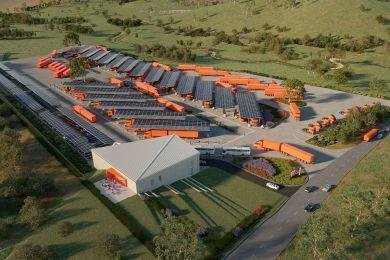
A food processing plant in South East Queensland uses about 12 GWh of electricity a year, with refrigeration and process loads that peak in the late afternoon. Network demand charges had become one of the largest lines on its power bill.
The question they needed answered: What size of solar and battery makes financial sense for the site, and how much will it really save?
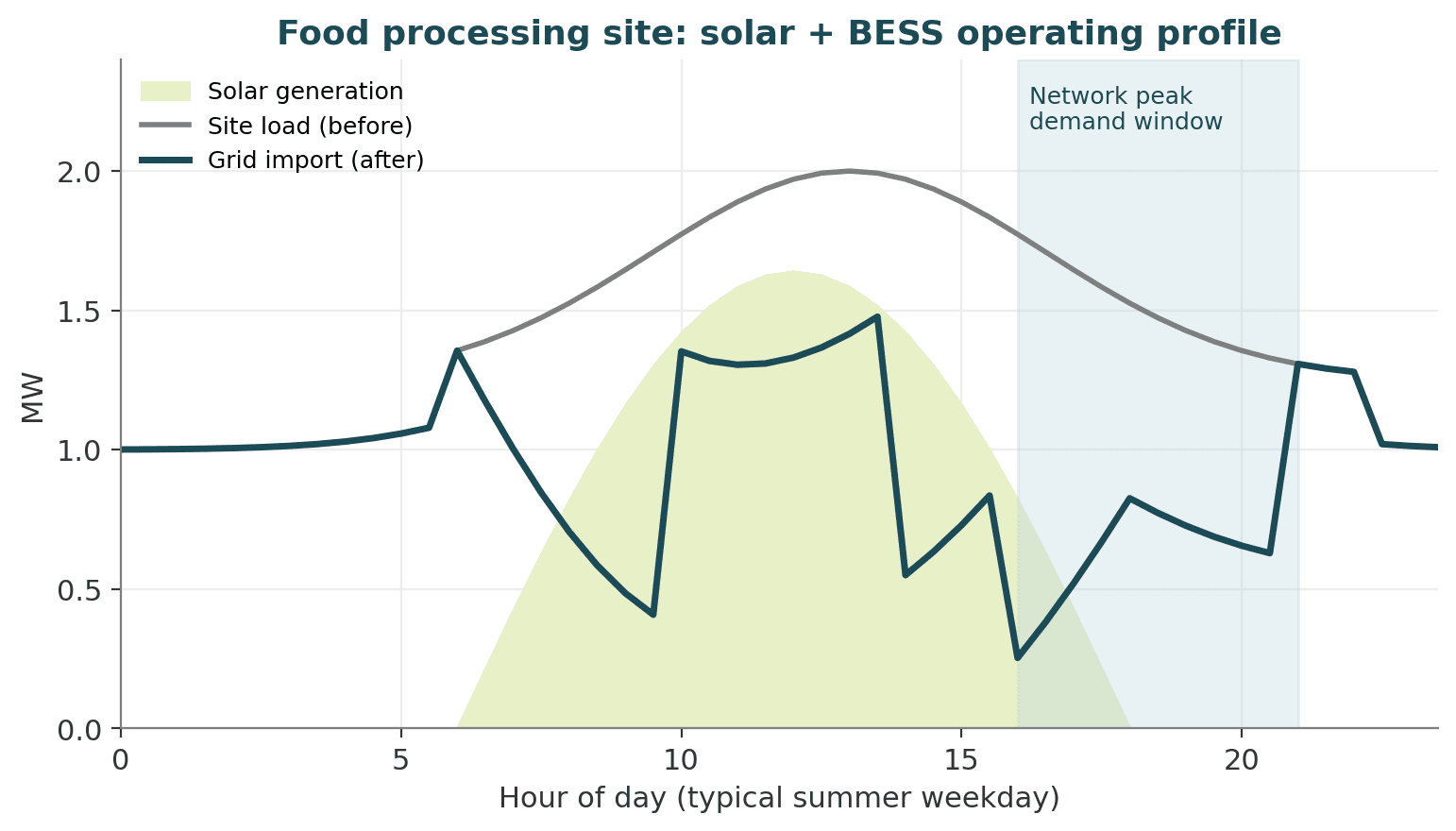
Each kVA of peak demand costs nearly $14 a month under the site's tariff. The late-afternoon peak alone was setting about $310,000 a year in demand charges.
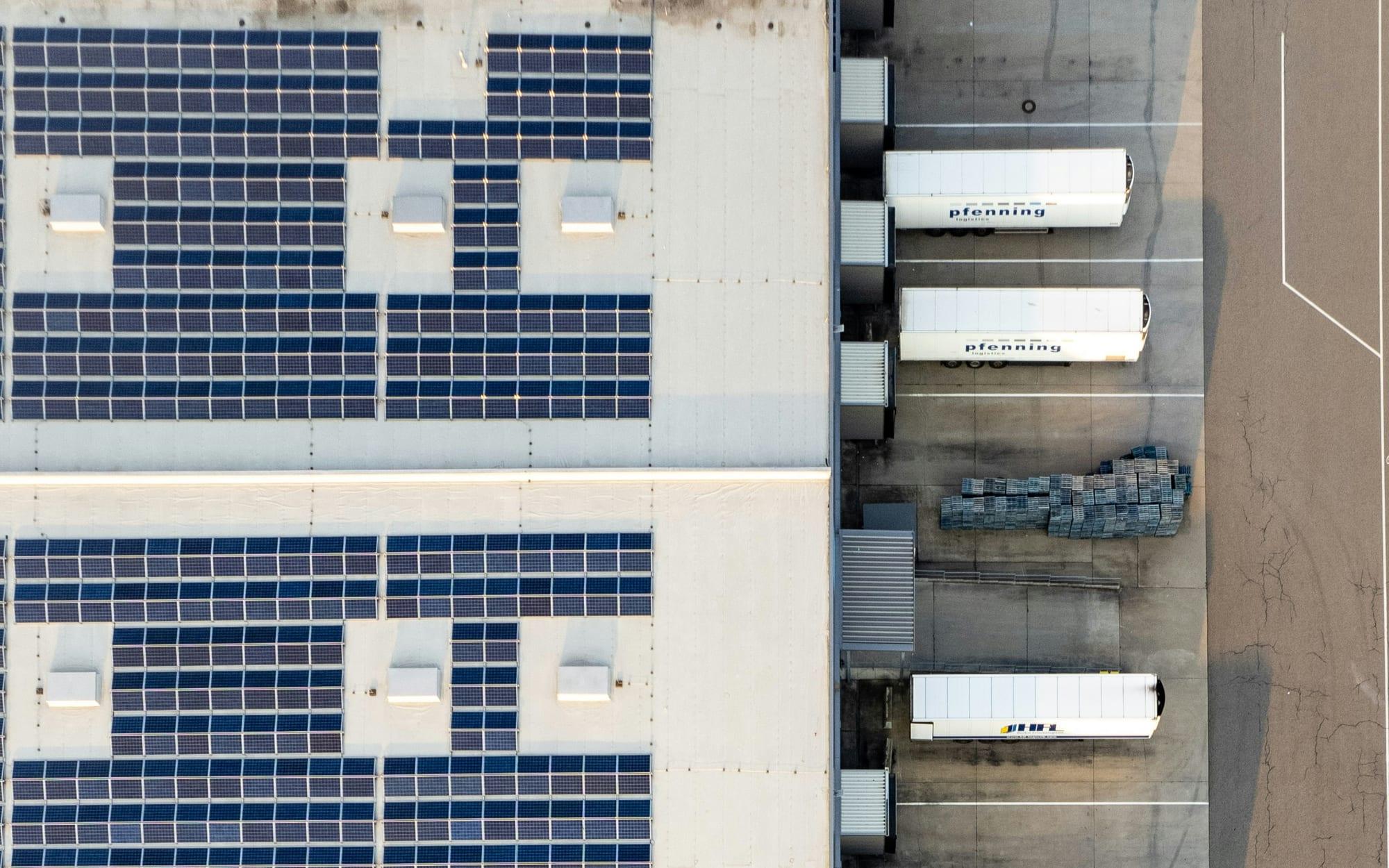
2 MWp of solar produces about 2.9 GWh a year, all used on site, for around $500,000 a year in savings.
A battery discharging from 4pm to 9pm cuts peak demand from about 1.8 MW to 0.8 MW, worth around $165,000 a year. On its own it pays back slowly, but it also backs up critical refrigeration.
The constraint was the main switchboard, not the roof. It needs a new incoming section to take the battery inverter.
Demand charges are set by the worst half-hour each month. At 98% battery availability over about 22 peak days, there's roughly a 36% chance of missing at least one day, which can cut the expected demand saving by about a third.
Energex network tariff 7200 (FY2026-27) at $13.91/kVA/month peak demand. Solar yield 1,450 kWh/kWp a year, avoided energy cost around $0.16/kWh. Solar around $1.05/W and battery around $550/kWh installed.
Technical Advisory & Assurance
Engineering & Design
Project Delivery & Owner's Engineering
Engineering & Design
Technical Advisory & Assurance
Tell us what you're working on, and one of the people below will get back to you.
Talk directly to


Want to join us? We're always keen to hear from engineers who value strong fundamentals and real delivery experience.
Careers at Amarna