Technical Advisory & Assurance
Technical study · Technical Advisory & Assurance
Comparing a 33 kV connection, a 132 kV line and a co-located battery for a 50 MW solar farm on curtailment, loss factors, system strength and 25-year value, and where the connection process slips.
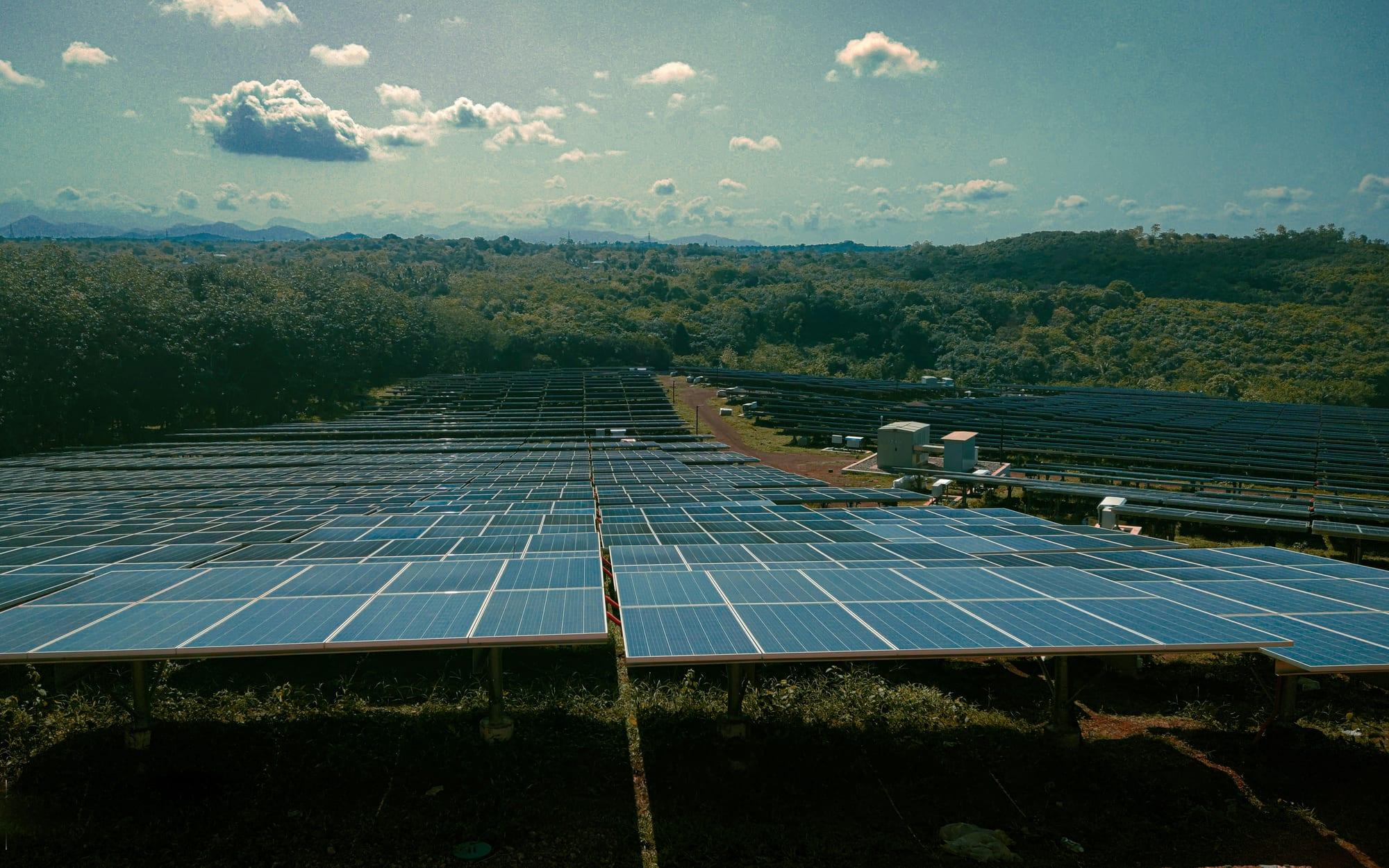
A developer had a 50 MWac solar farm site in regional Queensland, with two connection routes on the table and an early preference for the cheaper one. Network constraints, curtailment and system strength requirements were all unknowns.
The question they needed answered: Which connection option gives the best project value, and how do we get through the connection process without losing a year?
The 33 kV connection loses about 11% of output to network constraints, at a time when midday prices are already low.
The 132 kV line cuts curtailment, but its extra $16 million of capex isn't recovered over the project life.
A co-located battery absorbs energy that would otherwise be curtailed and sells it into the evening peak. With grid-forming inverters it also helps meet system strength requirements.
Most of the battery's value depends on evening price spreads. If they fall 30%, which is plausible as more batteries join the NEM, its advantage drops to roughly zero.
Schedule risk sits in power system modelling and negotiating the generator performance standard. Accurate plant models early are the best protection for the timeline.
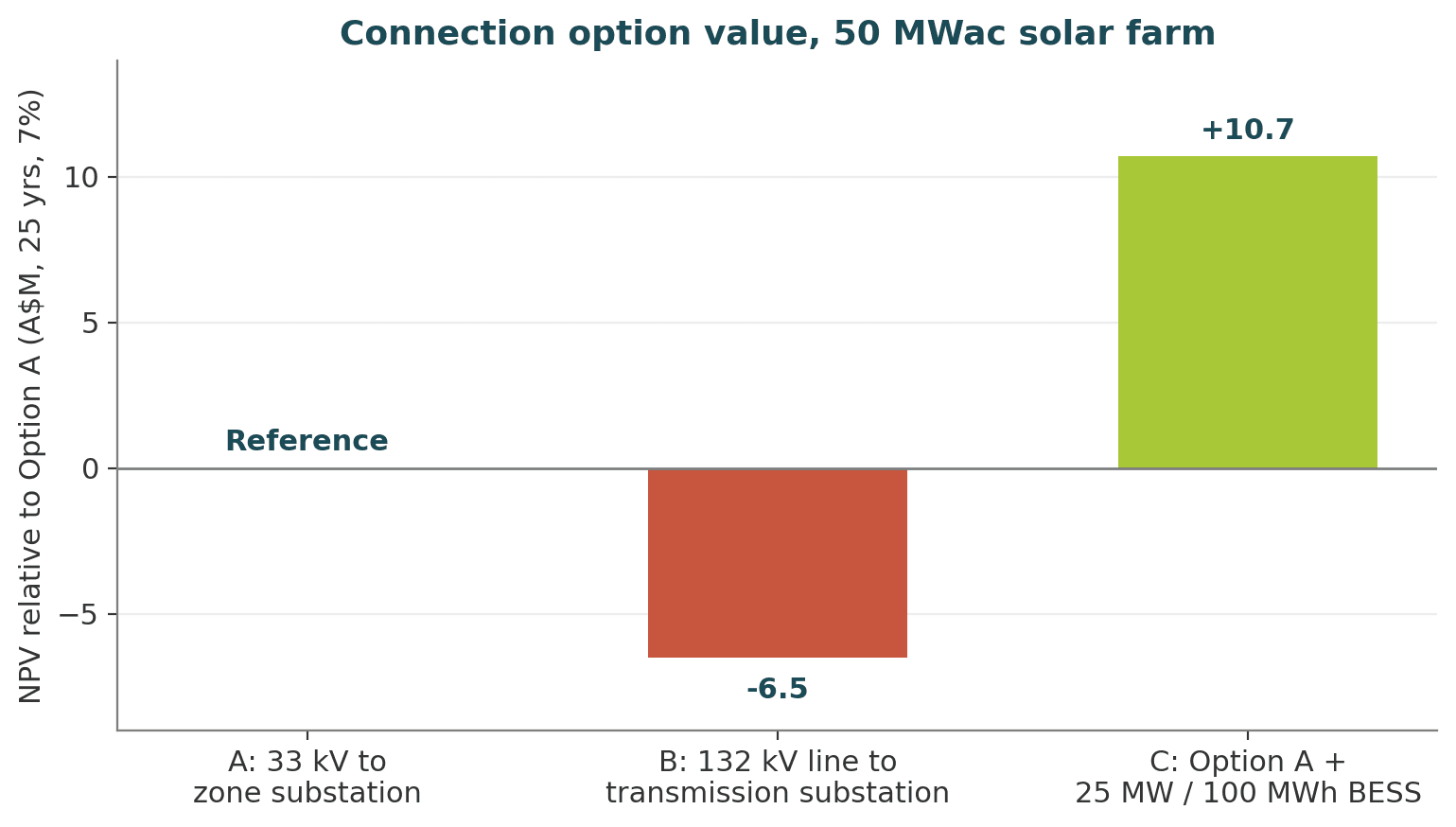
Solar capacity factor 28% (DC/AC ratio 1.3), energy and certificate value $65/MWh. Battery evening spread around $110/MWh at 330 cycles a year, plus FCAS. 25-year life, 7% discount rate. Curtailment and MLF indicative for a constrained regional network.
Tell us what you're working on, and one of the people below will get back to you.
Talk directly to


Want to join us? We're always keen to hear from engineers who value strong fundamentals and real delivery experience.
Careers at Amarna